Skip to content
Home Modalities

Modalities · MSCs

Mesenchymal Stem Cell (MSC) Development & GMP Manufacturing

Your mesenchymal stem cell (MSC) work is promising. The manufacturing challenge is making it perform the same way, every time, at every scale.

Talk to our MSC team See the process

  • Autologous and allogeneic
  • Clinical to commercial
  • Princeton and East Norriton
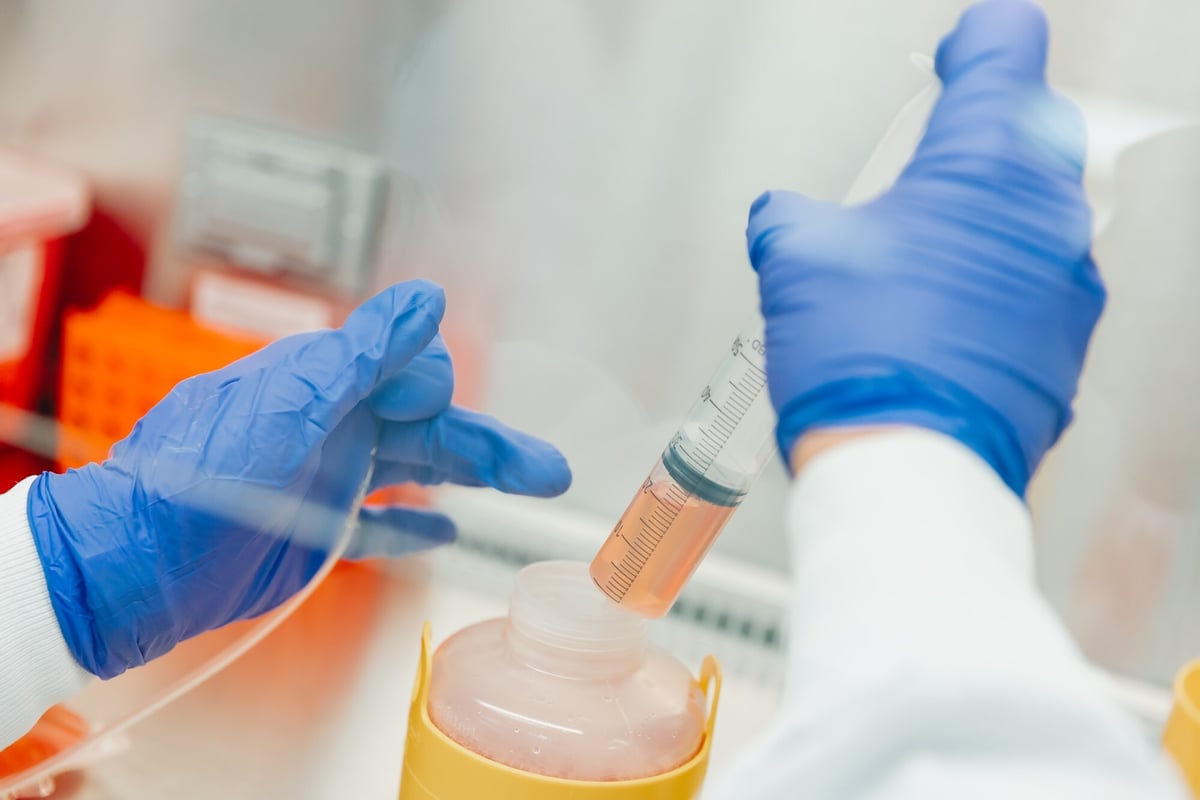
Gloved hands pipetting cell culture media in a biosafety cabinet

About

Made Scientific is a cell therapy CDMO with active MSC programs spanning early clinical development, GMP manufacturing execution, and commercial readiness.

MSC programs carry a specific manufacturing risk profile: donor variability, sensitivity to handling, and scale-dependent shifts in cell behavior that surface late and cost time. We work with sponsors to confront those risks early, designing processes where manufacturing control and biological complexity are engineered together rather than corrected later.

What differentiates our approach

  • Purpose-built specifications aligned for MSC biology, donor variability, and scale
  • Stage-appropriate process and analytical strategies that evolve with your program
  • Integrated development, manufacturing, and quality teams for fewer handoffs
  • Infrastructure qualified for clinical progression and long-term commercial supply

Process map

From cell bank to release

Follow an MSC program through each stage, with the service and the equipment behind every step.

  1. Cell bankingStep 01 of 07

    Starting material and cell banking

    Every program starts with qualified material. Donors are qualified before banking, so allogeneic programs manufacture from a known, characterized bank.

    • Starting material sourcing and donor qualification
    • Umbilical cord, Wharton's jelly, bone marrow, and adipose sources
    • GMP MSC cell banking, characterized against ISCT criteria

    Explore GMP manufacturing ›

    Equipment at this step

    Equipment for this step depends on your process. Ask our team about the platforms we would use for your program.

  2. Process developmentStep 02 of 07

    Process and analytical development

    Scale and comparability are planned here, before GMP, so the process that enters the clinic can grow to commercial demand.

    • MSC expansion, harvest, and formulation development
    • Media and feeding strategy optimization
    • Analytical method development, in-process controls, and release strategy

    Explore process and analytical development ›

    Equipment at this step

    Equipment for this step depends on your process. Ask our team about the platforms we would use for your program.

  3. ExpansionStep 03 of 07

    Planar and 3D expansion

    Platform choice follows your cell biology, target dose, and stage. Planar processes scale out to 40 CellSTACK-10 units, and bioreactors offer a route beyond that.

    • Planar and multilayer vessels
    • Hollow-fiber expansion
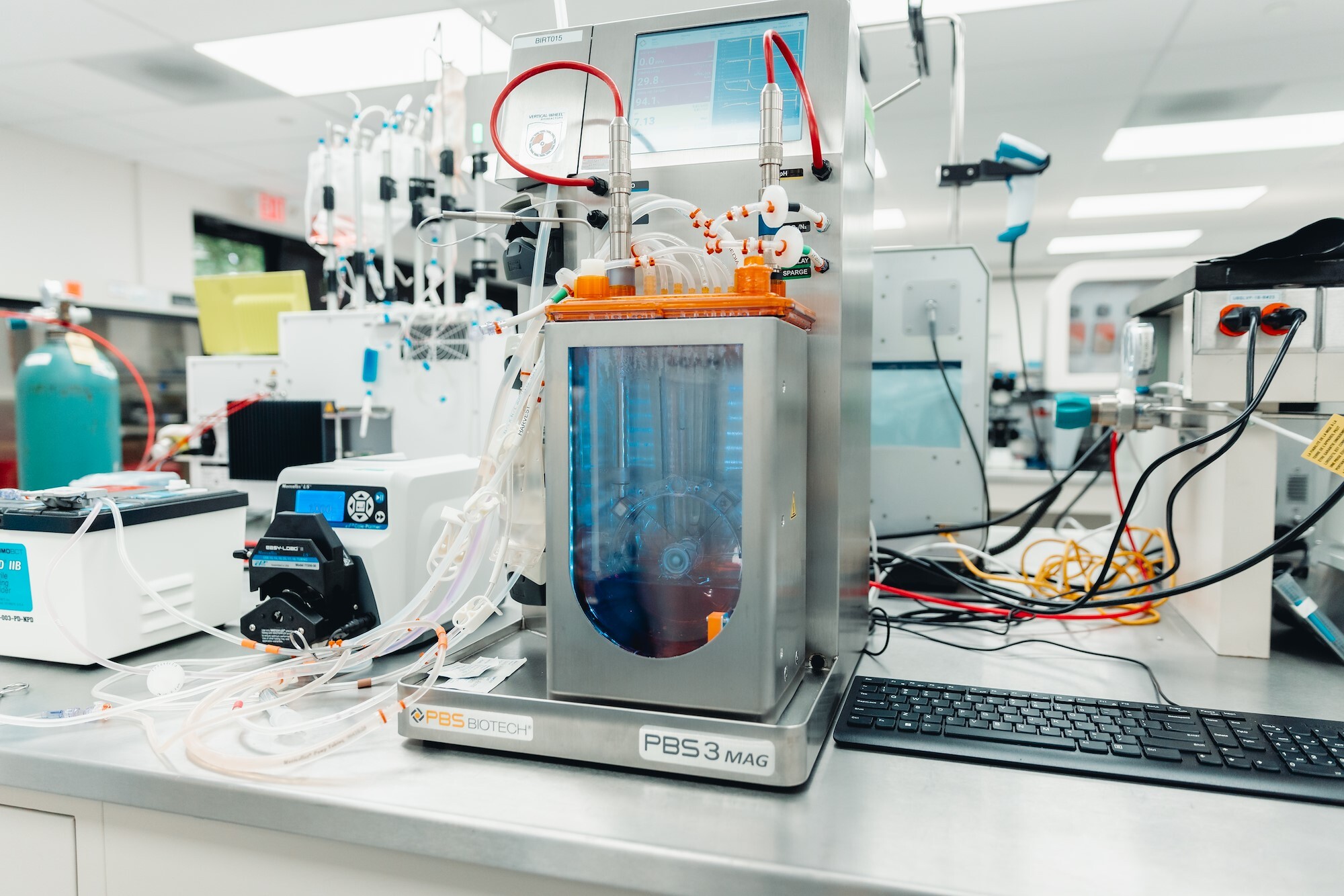
    • Stirred-tank and vertical-wheel bioreactors

    Explore GMP manufacturing ›

    Equipment at this step

  4. Harvest and formulationStep 04 of 07

    Harvest, wash, and formulation

    Closed systems recover, wash, and concentrate cells into the final formulation, with handling designed for adherent cell sensitivity.

    • Closed and semi-closed processing
    • Automated washing and concentration
    • Formulation for stability

    Explore GMP manufacturing ›

    Equipment at this step

  5. Fill and finishStep 05 of 07

    Aseptic fill and finish

    Your drug product goes into the container your program needs, with filling connected directly to release testing.

    • Vials, cryovials, bags, and bulk formats
    • Manual and semi-automated filling
    • Closed and semi-closed fill workflows

    Explore aseptic fill and finish ›

    Equipment at this step

    Equipment for this step depends on your process. Ask our team about the platforms we would use for your program.

  6. Freeze and storeStep 06 of 07

    Cryopreservation and cold chain

    Cryogenic handling and cold-chain release sit in the same workflow, so the product that leaves is the product that was released.

    • Product-specific cryopreservation
    • Cryogenic handling and storage
    • Cold-chain release

    Explore aseptic fill and finish ›

    Equipment at this step

  7. Release and filingStep 07 of 07

    QC, release, and regulatory support

    Lot release, stability, and CMC support close the loop, and you keep ownership of the filing.

    • Lot release, stability programs, and disposition
    • Quality systems aligned with FDA, EMA, and ICH expectations
    • CMC strategy and IND, IMPD, and BLA contributions

    Explore quality control testing ›

    Equipment at this step

    Equipment for this step depends on your process. Ask our team about the platforms we would use for your program.

How teams are advancing MSC programs

MSC sponsors apply different strategies depending on where their programs sit in development. The examples below highlight how teams translate process and manufacturing decisions into real program outcomes.

Early-stage MSC programs often need to progress quickly while process definitions are still evolving. In one program, teams worked through challenges such as cell agglomeration, process variability, and release readiness while maintaining momentum toward the clinic.

This case study illustrates how stage-appropriate process development enabled efficient clinical advancement without introducing downstream rework.
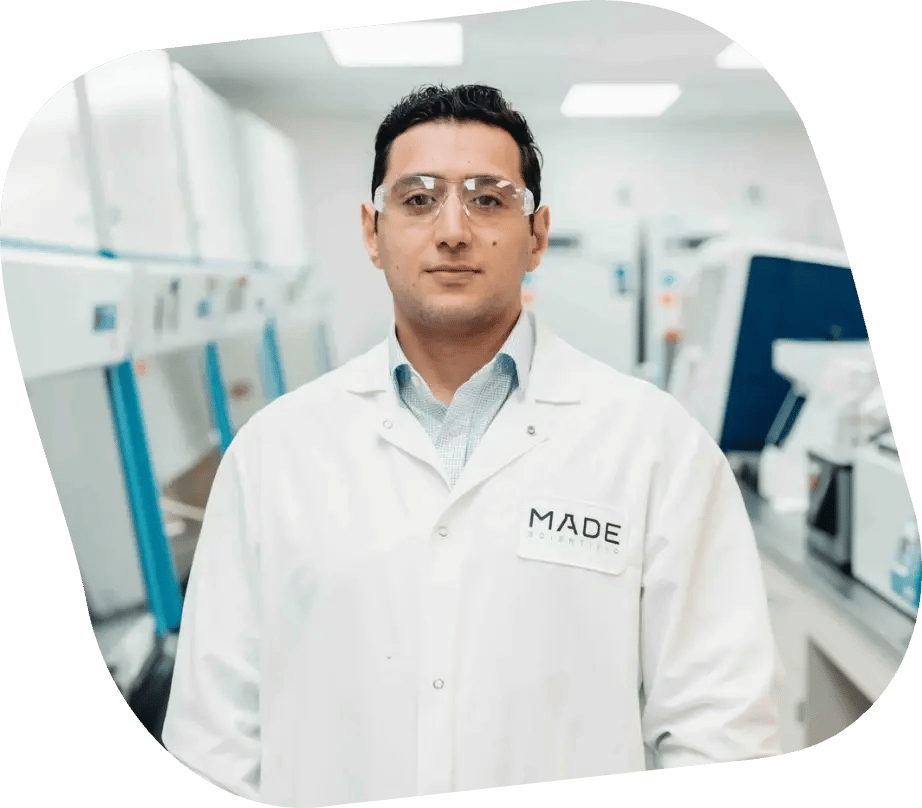
 

Made Scientific scientist in the cell therapy development lab

As MSC programs mature, the early decisions about platform selection, analytical strategy, and build vs. partner determine whether scale feels controlled or chaotic. This article walks through the factors that influence when to build in-house, when to partner, and how to avoid the traps that stall programs between Phase I and commercial readiness.
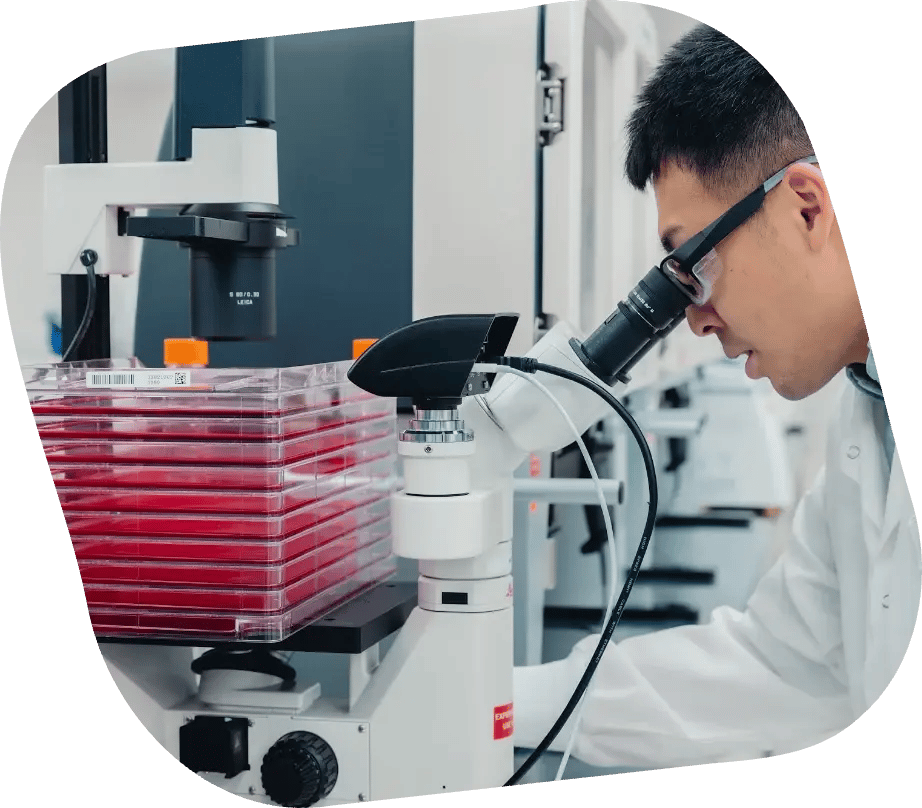
 

Made Scientific scientist at a microscope beside multilayer MSC culture flasks

Why Made Scientific for MSCs

Active MSC programs

Currently advancing MSC programs from development through GMP manufacturing, with real-world experience across the challenges that define this modality.

MSC-specific experience

Platform-agnostic support guided by MSC biology, donor variability, and the manufacturing realities of adherent cell therapies.

Built to scale

Stage-appropriate development and clear pathways from non-GMP process confirmation through GMP clinical and commercial manufacturing.

Integrated teams

Process development, analytics, manufacturing, and quality work as one team, reducing handoffs, accelerating decisions, and protecting product quality.

MSC Cell Manufacturing Insights

Technical perspectives and case-based insights focused on the development, manufacturing, and scale-up of MSC therapies.

Scientist loading a sample into an analytical instrument

Scale decisions for MSC manufacturing

Build in-house or partner with a CDMO
 

Scaling MSC manufacturing is not just a capacity question. This article breaks down the technical, operational, and organizational factors that influence whether building internal capability or partnering externally makes sense at different stages of development.

Read how early decisions around infrastructure, talent, and process maturity can shape long-term success.

Vertical-wheel bioreactor in the Made Scientific process development lab

From agglomeration to release

A stage-appropriate MSC process that scaled cleanly

MSC processes rarely fail all at once. They erode through small, compounding issues. This piece explores common MSC manufacturing challenges, from cell agglomeration to release testing, and outlines a development approach that enabled smoother scale-up without rework.

A practical look at designing MSC processes that hold up as programs advance.

Scientist running an analytical instrument at a lab workstation

Eleven manufacturing considerations for your MSC program

MSC development involves a series of interconnected decisions that are easy to underestimate early on. This article distills the most critical manufacturing considerations that influence scalability, consistency, and regulatory readiness across development stages.

A concise framework for teams planning their MSC manufacturing strategy.

Made Scientific scientist in the analytical development lab

Why MSCs are helping patients

Beyond manufacturing, MSCs offer unique biological properties that make them compelling across a range of therapeutic areas. This article explores how MSC mechanisms of action translate into clinical potential, and why they continue to attract interest across inflammatory and degenerative indications.

An accessible overview grounded in real-world development experience.

Made is easy to work with. We’ve got your back.

We work as an extension of your team. MSC development is rarely linear, so our engagement models are designed to flex with your program as timelines shift and data evolves.

Traditional & Dedicated Service

All Clients

We provide turnkey solutions with platform processes or purpose-built technology transfer, plus dedicated capacity models to secure your supply chain.

For MSC programs, this includes platform process transfer or purpose-built workflows from cell banking through drug product release.

Hybrid Client-In-Plant Operations

Mid-to-Late Stage Clients

We get you started, then step back. GMP-ready labs, cleanrooms, and equipment are available in shared or dedicated settings, supported by specialized experts.

Ideal for MSC sponsors who want hands-on oversight of manufacturing while leveraging established GMP infrastructure.

Custom Build-outs & Partnerships

Late-Stage and Commercial Clients

We collaborate on custom lab, cleanroom, warehousing, and cold-chain solutions tailored to your workflow and spatial needs in our expansion areas.

Designed for MSC programs approaching commercial scale with dedicated throughput requirements.

Single-use bioreactor on a lab bench in the Made Scientific process development lab
Made Scientific - Interactive Background

Ready to Advance Your MSC Program?

Tell us where your MSC therapy stands today. We’ll show you how we can take it from process development to the clinic and beyond.